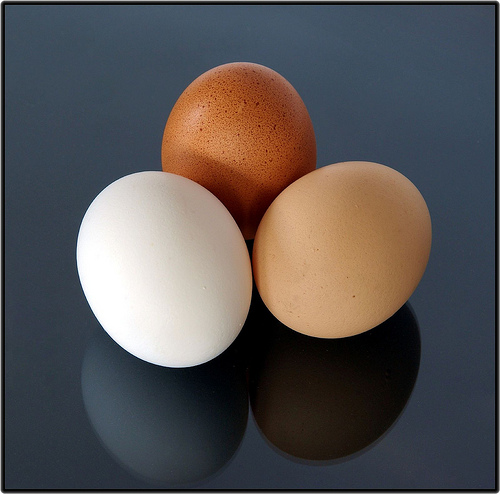
Around Easter, many eggs are consumed without a thought as to their origin, how the chickens are treated and how healthy the eggs from these farms are for us. Thankfully more people are becoming aware of the plight of caged chickens and the cruelty that lies behind the commercial factory farming egg production.
Battery Farmed Eggs
Eggs from conventional battery farms are produced from hens raised in small crowded cages, usually with multiple hens per cage. These cramped conditions prevent the chickens from engaging in natural behaviors such as wing-flapping, dust-bathing,
scratching, pecking, perching, and nest-building. Due to the cramped conditions and scarce food, fights are inevitable and so the birds are de-beaked to prevent the birds from harming each other during fights. This is a cruel barbaric practice that causes great stress to the birds and in some cases interferes with their ability to eat. There are also many other complications of keeping so many birds in confined conditions such as diseases (antibiotic use), mass culling of male chicks as they can’t lay eggs, laying hens may be forced to molt to increase egg quality (molting can be induced by extended feed withdrawal, water withdrawal or controlled lighting programs). The European Union will introduce an EU-wide ban on the use of conventional battery cages for egg-laying hens. This ban is expected to come into effect from 1 January 2012, hopefully, the US won’t be too far behind!
Free-Range
An alternative to battery farmed eggs is free-range eggs which are given outdoor access instead of being contained in
crowded cages. There have however been questions concerning the actual living conditions of free-range hens have been raised, as there is no legal definition or regulations for eggs labeled as free-range in the US. Many of the free-range hens are simply kept in barns, they are allowed limited outdoor access and there are still health concerns. Some free-range hens are given lots of outside access though so you just can’t be sure what you’re paying for.
Cage-Free, natural, organic and humane
Other standards of egg production include “Cage Free”, “Natural”, “Certified Humane”, and “Certified Organic.” Of these standards, “Certified Humane”, which carries requirements for stocking density and cage-free keeping, among others, and “Certified Organic”, which requires hens have outdoor access and are fed only organic, vegetarian feed, among other requirements, are the most stringent so look for these on your next trip to the grocery store. Be aware though that these eggs do cost more, personally for our household it’s worth it for peace of mind on how the hens were raised and treated to produce the eggs.
Alternatives
Instead of looking at commercially farmed eggs why not look for a local farm in your area that sells eggs? Even some suburban households have small backyard henhouses these days and have an egg surplus. Check out your local resources like Craigslist and farmers markets for locally produced and humanely produced eggs.
Packaging
One other thing to remember when looking for eggs in your supermarket is packaging. Instead of opting for the eggs wrapped in Styrofoam cartons look for ones in cardboard. Some manufacturers even use recycled products to produce their packaging to be sure to look for eco-friendly alternatives. If you buy your eggs at a farm or farmers market remember to save the cartons to return them the following week!
Sources: Image by pieceoflace at Flickr